
Miracle Mile Spotlight:
Craft and Folk Art Museum
In 1965 two cultural institutions arrived in the Miracle Mile, launching Museum Row: the Los Angeles County Museum of Art (LACMA) and what in time would be known as the Craft and Folk Art Museum (CAFAM). LACMA made its debut with national media coverage and the cream of the city’s high society in attendance. But the real buzz was created by a new café and gallery a few blocks east on Wilshire called “The Egg and Eye.”
 “Well, the original concept for The Egg and The Eye was to serve the omelets upstairs and while people waited they would go in the gallery. When they were in the gallery, they would encounter maybe a pot on a pedestal,” explained its founder Edith R. Wyle (1918-1999) in a 1993 interview. “The fact that it was a pot on a pedestal would lead people to understand that this must be art, and I think they got the message. This was a first. People did not display crafts or folk art in an artistic manner in a display setting.”
UCLA-educated, Wyle was an artist with a deep passion for folk art. Her enterprise was an immediate hit and in 1973 it evolved into a non-profit organization with a new name: the Craft and Folk Art Museum.
The inexhaustible Wyle initiated exhibits, workshops, educational programs, and created the Festival of Masks, a multicultural festival. In the process, CAFAM became a dynamic community center in the Miracle Mile – a place not only to see indigenous crafts and objects, but a place to learn weaving, jewelry making, and other skills. This tradition continues today under the guidance of Executive Director Suzanne Isken.
 Isken [photo right], former Education Director at the Museum of Contemporary Art, came to the museum four years ago. Her bold and imaginative leadership has expanded scope of its exhibits and classes. Craft and folk art, in her perspective, are not relegated to the past – it is something that is being created today in dynamic new ways. The energy of the museum is obvious to even those passing by on Wilshire Boulevard. A façade project initiated by Isken serves as a very public canvas for Los Angeles-based artists, most notably when the front of the building was “yarn bombed” with knitted granny squares.

“When I first came here everyone kept telling me that the museum was a hidden gem and my reaction was: to hell with the hidden,” Isken says. “Our gift shop has always been very popular, but many people didn’t understand that there was a museum upstairs. That was part of our decision to bring the museum downstairs closer to the street.”
 A native of Los Angeles and a mother of four, Isken exudes curiosity and enthusiasm. These qualities are evident in the wide range of craft exhibited at the museum – from the work of male quilt makers to an upcoming show featuring shoe designer Chris Francis.
“I came from a contemporary art museum. My vision, given my experience, was to look at more contemporary craft. We have an important place in L.A. at a time when craft is getting a lot of attention. People are really into making things and that is a natural audience for us: the makers.”
Isken views the Miracle Mile as a unique area with a great deal of vitality. “We see ourselves as a ‘hands on’ neighborhood museum. We keep our ticket prices as low as possible. We offer a craft night every Thursday night. We have free admission on Sundays. We try to stay connected to the community.”
 Today the hot trend in automobiles, smart phones, and museums is to promote themselves as being “interactive.” But being truly interactive – a museum where you can get your hands dirty shaping a pot or prick your finger learning to embroider – has been a decades-old mission at CAFAM. It has always been a place that appeals to all of the senses, including a sense of community.
Craft and Folk Art Museum
5814 Wilshire Boulevard
Los Angeles, CA 90036
323-937-4230
For additional information:
Craft and Folk Art Museum website: www.cafam.org
Archives of American Art, Smithsonian Institution: Oral History Interview with Edith Wyle, March-September 1993


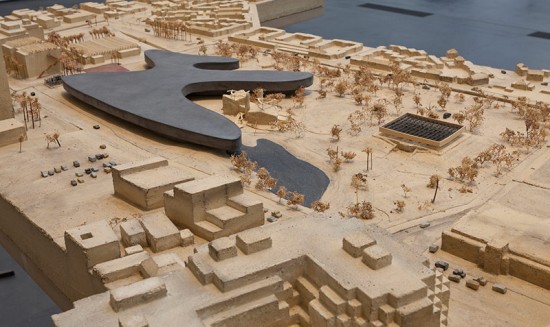
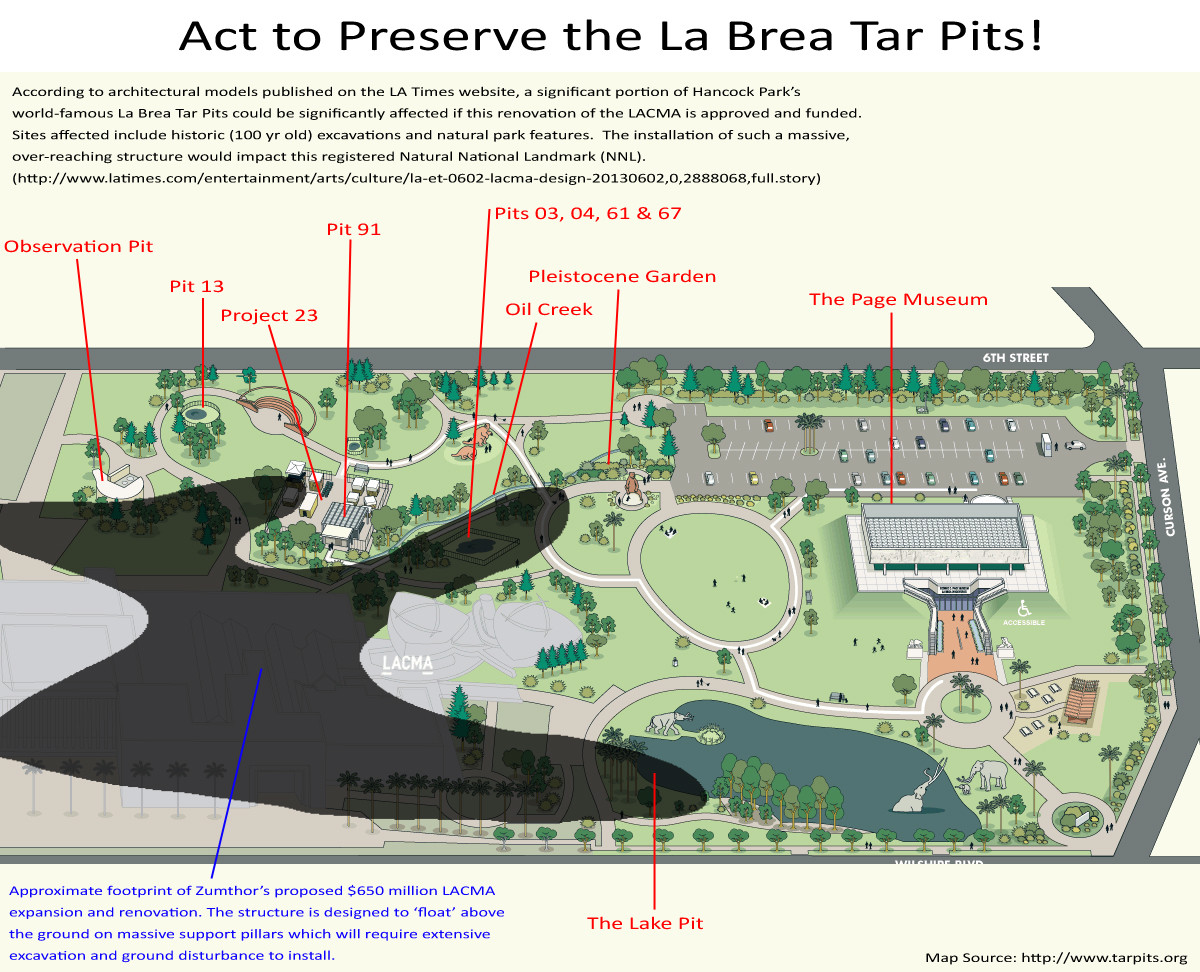
 Wilshire Boulevard has always more-or-less served as a moat to shield the nearby residential area from the full brunt of disturbances from museum traffic, events, and noise. By lurching south of the boulevard into the Miracle Mile the largest museum west of the Mississippi River will become the hulking next-door neighbor to thousands of residents. This intrusion is fraught with problems – it is the museum equivalent of “mansionization” and will overwhelm the entire neighborhood.


 …In August 2011, Moody’s Investors Service downgraded LACMA’s bond rating and Museum Associates found themselves dog-paddling in the deep end of a financial mess of their own making. They needed an infusion of cash to stay afloat. Four months later, in October 2011, Museum Associates abandoned their promise to renovate the May Company for LACMA’s purposes and announced they had leased it to the Academy of Motion Picture Arts and Sciences [AMPAS] for an Academy Museum.
 But then, Museum Associates eloped with AMPAS and now what do we get? A third of the original May Company will be demolished to make way for a giant sphere that looks like it rolled here from Disney World in Orlando; a million visitors a year with no new on-site parking; gridlock; traffic and parking intrusions to our neighborhoods; a digital sign district; super graphics; searchlights; celebrity premieres on Fairfax Avenue; paparazzi; screaming fans; long lines of limos; midnight screenings; concerts; and numerous special events. And will most of these functions be open to the public? Not likely.
 The cost of the project is the subject of speculation. LACMA Director Michael Govan has maintained that the razing of the original museum campus and the construction of the new Zumthor structure – along with an endowment fund – would cost around $650 million. Many architects and experts estimate that the price tag would be closer to $1 billion. The cost of this new design – as well as environmental, seismic, and land use issues – will be analyzed in a feasibility study to be completed in spring 2015.


 Miracle Mile Residential Association